Table of Contents
Hornets and wasps are closely related, but they’re not identical. They have their own look, their own nesting habits, and their own level of aggression. That’s why so many homeowners mix them up, especially here in Texas where we see both all the time.
Knowing the difference helps you understand what you’re dealing with, which stings hit harder, and which ones you should never try to remove on your own. We’ll break down all of that in the content below.
What a Wasp Looks Like
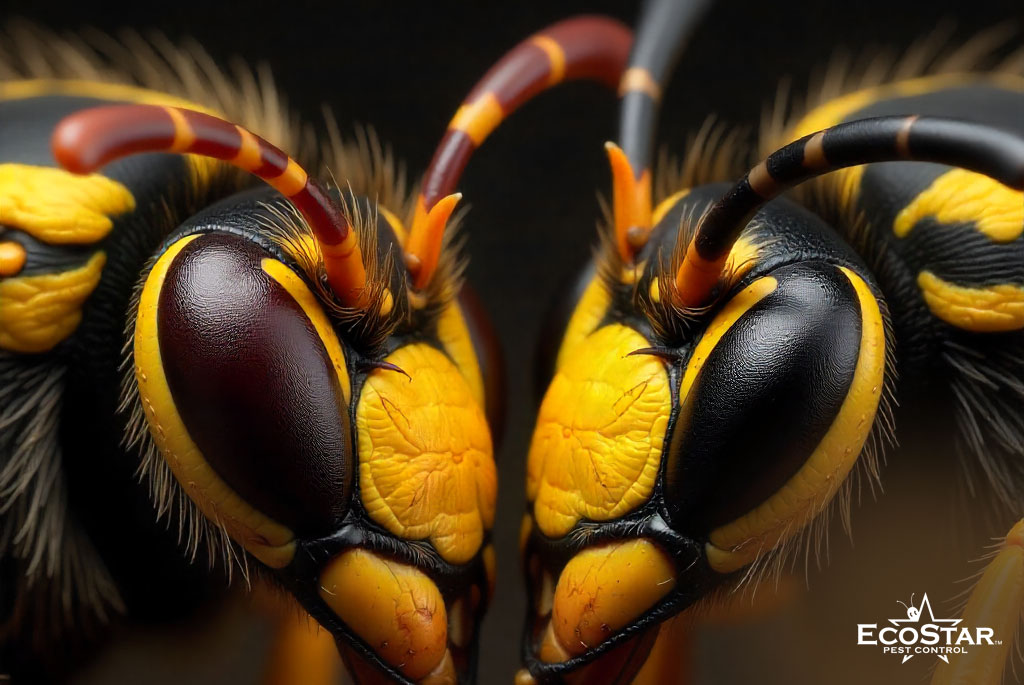
Wasps in Texas have a pretty recognizable look once you know what to watch for. They usually have:
- A skinny, pinched waist.
- Long legs that dangle when they fly.
- Smooth bodies with almost no hair.
- Colors that range from bright yellow-and-black to rusty brown or deep red.
Around most Texas homes, you’ll see two main types: paper wasps and yellow jackets.
Useful Resource: The Seasonal Pest Control Checklist Every Dallas Homeowner Needs
Paper Wasps
Paper wasps are the ones that like to build those open, umbrella-shaped nests under roof edges, patio covers, playsets, and other spots that stay dry.
How to spot them:
- Long, slim bodies.
- They fly in a slower, more relaxed way.
- Usually calm unless you get too close to their nest.
Yellow Jackets
Yellow jackets look like smaller, more intense versions of hornets, and trust me, their attitude matches.
Here’s what makes them stand out:
- Very territorial, especially as summer turns into fall.
- They hide their nests in ground holes, wall voids, and hard-to-see areas.
- They can sting multiple times, and they don’t hesitate if they feel threatened.
Further Reading: 7 Expert Tips to Keep Wasps Away from Your Home and Yard
What a Hornet Looks Like
You can spot a hornet pretty quickly, they’re larger, heavier-looking, and way more intense than your average wasp. You’ll notice:
- A wider, more rounded abdomen that makes them look bulkier.
- A thick, sturdy body.
- Bold coloring, usually black and white or black and yellow.
And here’s the thing: hornets don’t play around. Get too close to their nest, and they’ll defend it fast and aggressively.
Bald-Faced Hornets
These are the hornets most Texas homeowners see around their homes, even though they’re technically still a type of wasp. Most people call them “hornets” simply because of their size and the way they behave.
You can spot them by:
- Black bodies with bright white markings on the face and abdomen.
- Big, enclosed paper nests that look like a gray football.
- Nest locations high up in trees, tucked in bushes, or hanging along the sides of homes.
Behavior Differences: Which One Acts More Aggressive?
Here’s where the real difference shows up, how they behave when you get anywhere near their nest.
Wasps
Wasps can get defensive, but most of the time they’re not looking for a fight.
- They’ll protect their nest if you get too close.
- Paper wasps stay pretty chill unless you bump into their space.
- Yellow jackets, on the other hand, are very territorial and quick to react.
Hornets
Hornets take things to a whole different level.
- They’re extremely protective of their colony.
- They respond faster and chase farther than regular wasps.
- Their stings hit harder because they inject more venom.
If you spot a big, fully enclosed nest hanging from a tree or tucked along the house, keep your distance, hornets are not the ones to test.
Nest Differences
You can tell a lot just by looking at the nest, and you don’t have to get close to figure out what you’re dealing with.
Wasp Nests
Different wasps build different types of nests:
- Paper wasps: They make those open, umbrella-shaped nests where you can see every cell. You’ll find them under rooflines, patio covers, and playsets.
- Yellow jackets: These guys stay hidden. Their nests are tucked underground, inside wall voids, or under piles of debris.
Wasp nests are usually smaller and more spread out compared to hornet nests.
Hornet Nests
Hornet nests are a whole different story:
- Big, round, and completely enclosed.
- Built from gray, papery material.
- Often hanging high in trees or attached to the side of a home.
- Can hold hundreds of stinging insects.
If you spot a nest that looks like a gray football, assume it’s hornets and keep your distance.
Learn More: Pest Control for Dallas Rental Properties: What Landlords Should Know?
Stings: Pain Levels & Risks
Both wasps and hornets can sting more than once, but hornets usually pack a bigger punch. Their stings hurt more simply because they inject more venom each time.
What Texas Homeowners Should Know
- Any sting can cause swelling, heat, and sharp pain.
- Multiple stings can trigger allergic reactions, even in people who normally do fine.
- Accidentally bumping or vibrating a nest can set off a full-on swarm.
- If anyone in your home has allergies, even a small amount of wasp or hornet activity should be taken seriously.
These pests don’t give you much warning before they react, so staying cautious goes a long way.
When to Call a Professional
Here in Texas, we see stinging pests almost year-round, so it’s smart to bring in help when things start looking risky. Call a pro if you spot:
- A nest popping up near doors, patios, or kids’ play areas.
- Wasps slipping in and out of wall gaps.
- A big hornet nest hanging in a tree or tucked along the house.
- Yellow jackets acting aggressive or buzzing around the yard.
Trying DIY with stinging insects can go bad fast. Removing nests safely takes the right gear, the right product, and the right timing, especially when hornets or yellow jackets are involved.
If you need help, you can always count on the EcoStar Pest Control team to handle it safely.