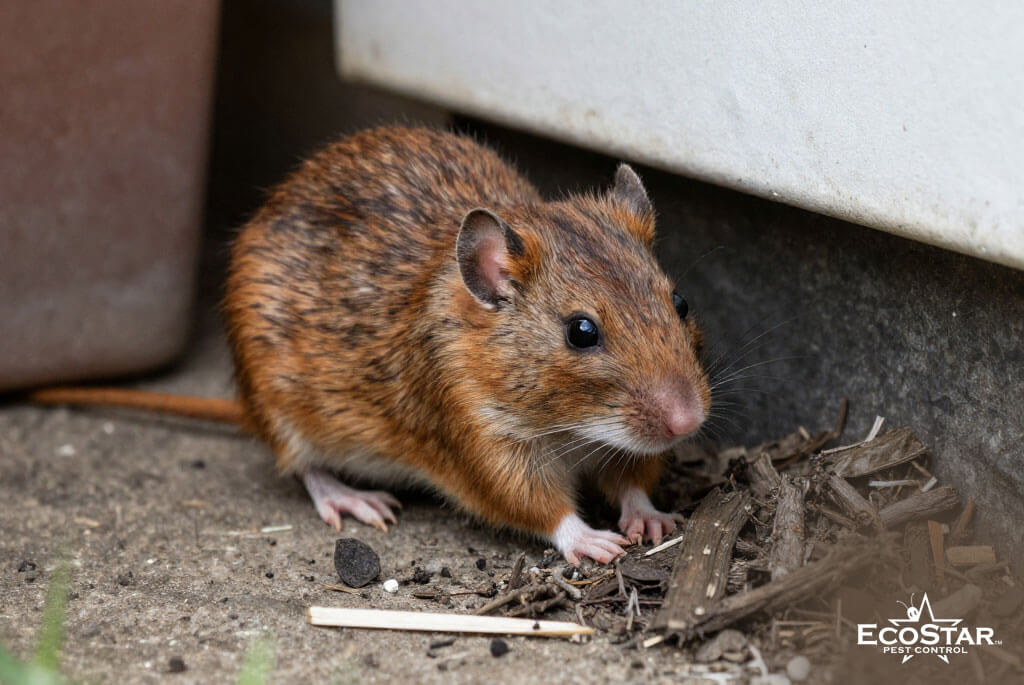
Most Texas property owners don’t realize they have a rodent problem until it’s already out of control. When rats or mice start showing up during the day, it usually means they’ve been in the home longer than people realize.
Rodents are quiet and good at staying hidden, but they always leave clues behind. If you know where to look, you can catch the problem early.
Below, we’ll walk through the most common signs of mouse and rat activity, the same things a local pest pro checks for during a real home inspection.
1. Small Droppings in “Low-Traffic” Areas
Rodent droppings are often the first clue, but most people don’t notice them right away.
Check places you don’t visit daily:
- Behind appliances
- Inside cabinets
- Along garage walls
- In attics or storage rooms
Mouse droppings are tiny and rice shaped. Rat droppings are larger and blunt on the ends. Even a few droppings mean active movement, rodents don’t leave old messes behind.
2. Scratching or Movement Sounds at Night
If you hear light scratching, scurrying, or tapping noises in the dark, don’t ignore it.
Rodents are nocturnal. They move when your home is quiet:
- Inside walls
- Above ceilings
- In attic insulation
A lot of homeowners assume it’s just the house settling. In reality, it’s often rodents traveling through the walls.
Further Reading: The Seasonal Pest Control Checklist Every Dallas Homeowner Needs
3. Chew Marks on Unexpected Items
Rodents chew constantly to keep their teeth from overgrowing. This means damage shows up fast.
Common chew targets include:
- Electrical wiring
- Cardboard boxes
- Plastic storage bins
- Wood edges and baseboards
Fresh chew marks look rough and light-colored. Older ones darken over time. If you keep seeing new chew marks, rodents are active, not just passing through.
4. Grease Smudges Along Walls and Entry Points
Rats and mice follow the same paths every night. Over time, their bodies leave greasy rub marks along surfaces.
Look closely at:
- Wall edges
- Baseboards
- Door frames
- Garage walls
These dark streaks are a big red flag. Once you see grease marks, rodents have been traveling that route for a while.
5. Nests Hidden in Warm, Quiet Spots
Rodents don’t build nests out in the open. They hide them where people rarely look.
We see this most often in garages and basements, which is why we explain why rodents love Texas garages and basements and how to stop them in more detail.
Common nesting materials include:
- Shredded paper
- Insulation
- Fabric
- Dryer lint
You’ll usually find nests in attics, behind appliances, storage boxes, or garage corners. If nesting material looks freshly disturbed, the infestation is active.
Useful Resource: Pest Control for Dallas Rental Properties: What Landlords Should Know?
6. Strong, Musty Odors That Don’t Go Away
A lingering, unpleasant smell often signals rodent activity.
This odor comes from:
- Urine buildup
- Droppings
- Nesting areas
In enclosed spaces like closets, attics, or garages, the smell gets stronger over time. Air fresheners won’t fix it, the source must be removed.
7. Pets Acting Strangely Near Walls or Cabinets
Dogs and cats usually notice rodents before humans do.
Watch for pets:
- Staring at walls
- Pawing under cabinets
- Barking or sniffing specific spots
Pets react to sounds and smells you can’t detect. If they fixate on one area repeatedly, rodents are likely nearby.
8. Entry Points That Look Too Small to Matter
Most Texas homeowners underestimate how small an opening rodents actually need.
Mice can squeeze through holes the size of a dime. Rats only need a quarter-sized gap. Check for:
- Cracks in foundation lines
- Gaps around utility pipes
- Damaged door seals
- Garage door corners
If entry points aren’t sealed, rodents will keep coming back no matter how many traps you set. If rodents are already inside, this guide on how to get rid of rodents in your Dallas home walks through proven steps local experts actually use.
Why Catching Rodents Early Matters in Texas
Rodents multiply fast, especially in warm Texas conditions. In many cases, early warning signs are enough to stop an infestation before it spreads, and professional Rodent Control Dallas helps locate nesting areas, seal entry points, and eliminate rodents safely. One small problem can turn into a full-blown infestation in weeks.
Early detection helps:
- Prevent structural damage
- Reduce health risks
- Avoid expensive repairs
- Stop repeat infestations
If you’re noticing even one or two of these signs, it’s time to take action. Waiting only gives rodents more time to settle in.
Final Word from a Texas Pest Pro
Rodents don’t just “show up.” They leave signs long before most homeowners realize what’s happening. The sooner you spot the problem, the easier and cheaper it is to fix.
If something feels off in your home, trust that instinct. At EcoStar Pest Control, that’s usually when we get called in and catch the issue early.