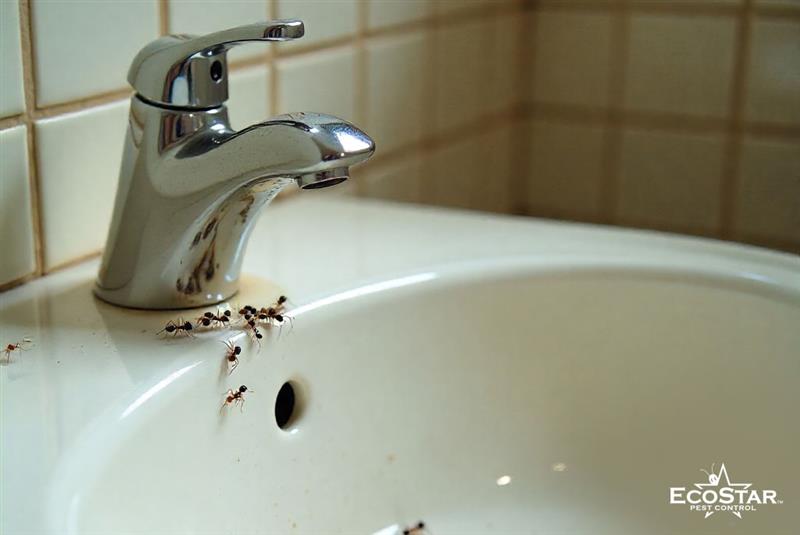
If you’re spotting ants in your bathroom, don’t worry, you’re not alone. We see this in Texas homes all the time. Bathrooms stay warm, damp, and full of easy hiding spots, which makes them the perfect place for ants to move in even if the rest of your house feels spotless.
In this guide, we’ll discuss why ants show up in Texas bathrooms, how to get rid of them quickly, and what you can do to keep them from returning. Whether they’re marching around your sink, tub, or toilet, these steps will help you take back your bathroom fast.
1. Why Ants Show Up in Bathrooms
Moisture Is the Biggest Magnet
Bathrooms collect moisture in all the places you don’t notice, under cabinet pipes, around old caulking, and near the drain lines. Ants follow that humidity like a signal and start building trails straight to it.
Leaky Pipes and Hidden Moisture
Even a tiny drip under your sink is enough to bring ants in. Bathrooms often have moisture hiding behind the vanity, under the toilet, or around old caulking, places you don’t normally check. Ants find that damp spot long before you do, and once they do, they’ll keep coming back for it.
Tiny Gaps Give Them Easy Entry
Ants can enter through gaps you’d never think about, including:
- Gaps around plumbing
- Cracked or missing caulking
- Loose or lifted tiles
- Window corners
Once a single ant finds the path, the entire trail follows.
Products That Act Like Food to Ants
Bathroom items may not look like food to us, but ants see them differently. They’re attracted to:
- Toothpaste
- Lotions
- Soap residue
- Hair products
Anything slightly sugary or scented can bring ants straight to your sink.
Learn More: How to Get Rid of Ants in a Warehouse: Expert Commercial Pest Tips
2. The Most Common Bathroom Ants We See in Texas
Odorous House Ants (Most Common)
These are the tiny dark-brown ants most Texas homeowners deal with. You’ll know it’s them by the smell. Crush one, and you’ll get that strong “rotten coconut” scent right away.
Argentine Ants
Fast, aggressive foragers that travel in long, steady lines. They build huge colonies, so if you see a constant trail near your sinks or counters, this is usually the culprit.
Ghost Ants
Super small with pale legs and a light-colored body. They’re often spotted around sinks, drains, and shower edges where moisture stays high.
Carpenter Ants
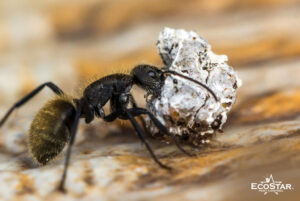
These are much larger than the typical bathroom ant. If you’re seeing carpenter ants inside your bathroom, it often means you have wet or damaged wood somewhere behind the walls or under the flooring.
Useful Resource: Why Ants Keep Coming Back Even After DIY Treatments
3. Signs Your Bathroom Ant Problem Is Getting Worse
When an ant issue starts growing, the signs become pretty obvious. Here’s what to watch for:
Long, steady trails around the sink or tub
A few ants are normal scouts. Long lines mean the colony has locked onto a steady food or water source inside your bathroom.
Ants showing up at night
Most ant species in Texas forage after dark. If they’re marching around your bathroom at night, you’ve got active workers coming in from a nearby nest.
They keep coming back even after cleaning
If you wipe the counters and they still return, that means the problem isn’t the surface, it’s a nest feeding from inside the walls or foundation.
Little piles of debris or wood dust
This can point to carpenter ant activity, especially if the dust is near baseboards, door frames, or around the tub.
You’re spotting ants in more than one room
When ants spread beyond the bathroom into kitchens, laundry rooms, or hallways, it usually means the colony is well-established.
Read More: 8 Fire Ant Control Tips Every DFW Homeowner Should Know This Summer
4. How to Get Rid of Bathroom Ants Fast (Step-by-Step)
These are the same steps we use on ant service calls all over DFW area, simple, effective, and proven to work.
Step 1: Clear Out Whatever’s Attracting Them
Start by giving the bathroom a good wipe-down. Ants rely on scent trails, so cleaning breaks their communication line.
Make sure you hit the easy-to-miss spots:
- Behind and around the faucet
- Inside and around drains
- Under bottles of soap, shampoo, and lotions
- Any toothpaste or product residue on the counter
When you remove the smells and sticky spots ants follow, you cut off their reason to be there in the first place.
Step 2: Fix Moisture Problems
Most bathroom infestations start with moisture.
Check for:
- Dripping pipes.
- Loose caulking.
- Wet sinks or standing water.
- Damp cabinets.
Dry everything out and repair leaks as soon as you can.
Step 3: Use Ant Baits (Not Sprays)
Sprays only kill the ants you see. Baits allow worker ants to bring poison back to the colony, which is how you actually end the infestation.
Place baits:
- Under the sink.
- Near ant trails.
- Along baseboards.
- Behind the toilet.
Don’t clean away the ants immediately, let them take bait back to the nest.
Step 4: Seal Entry Points
After ants stop showing up, block the openings they used:
- Seal cracks around plumbing.
- Re-caulk around tubs and sinks.
- Patch loose tiles.
- Replace damaged weather-stripping near windows.
A small gap is all ants need to return.
Step 5: Flush Out the Drain (If Needed)
Some ant species hang around bathroom drains because they offer steady moisture. If you’re seeing ants near the sink or tub, a quick drain flush can help.
Pour hot water or a vinegar solution down the drain to clear out things like:
- Scent trails.
- Mold buildup.
- Old residue or grime ants might be feeding on.
This won’t wipe out the colony, but it’s a solid way to cut down repeat activity in the same spot.

5. Why Ants Keep Coming Back (Even After Cleaning)
Homeowners often clean the visible trail, but not the source.
Ants return because:
- The nest is still active.
- Moisture hasn’t been fixed.
- Entry points remain open.
- They’ve established a satellite colony inside the walls.
- You’re killing only the foragers, not the queen.
Once the queen is alive, the colony continues.
6. How We Treat Bathroom Ant Infestations in Texas
When we handle bathroom ant problems in Texas homes, we follow a simple but highly effective process. Here’s what that usually looks like:
1. Full Inspection
We start by figuring out why the ants are there. That means checking for:
- Hidden moisture.
- Gaps or openings they’re using.
- The species we’re dealing with.
- Where the nest is hiding.
Finding the source is half the battle.
2. Targeted Ant Baiting
Instead of spraying everything, we use professional-strength baits that worker ants carry straight back to the colony. That’s how you eliminate the nest, not just the ants you can see.
3. Spot Treatments for High-Activity Areas
If needed, we treat the hot spots around:
- Plumbing lines
- Drains
- Baseboards
- Wall voids
This knocks down active trails fast.
4. Moisture & Sanitation Recommendations
Ants love damp bathrooms. Fixing leaks, sealing gaps, and keeping surfaces dry helps prevent them from coming right back.
5. Follow-Up Visits
Some colonies collapse in a few days, while larger ones take 7–14 days. We come back to make sure the infestation is completely gone.
6. Prevention Plan
Finally, we seal the common entry points and apply a protective perimeter treatment around your home to keep future ant activity away.
Useful Resource: What to Expect During Your First Pest Control Treatment in Fort Worth
Final Thoughts
Bathroom ant problems don’t just pop up out of nowhere. There’s almost always a reason, too much moisture, a hidden leak, or small gaps that give ants an easy way inside. The good news is that with a few simple steps and a bit of consistency, you can usually shut the problem down fast.
But if the ants keep returning, or you’re suddenly seeing them in more than one room, that’s a sign the colony is bigger or tucked deeper inside the walls. At that point, calling in a pro, like our ant control service saves you a ton of time, stress, and repeat cleanups.