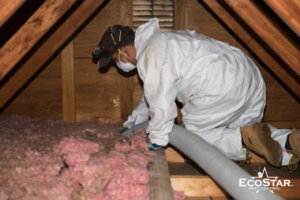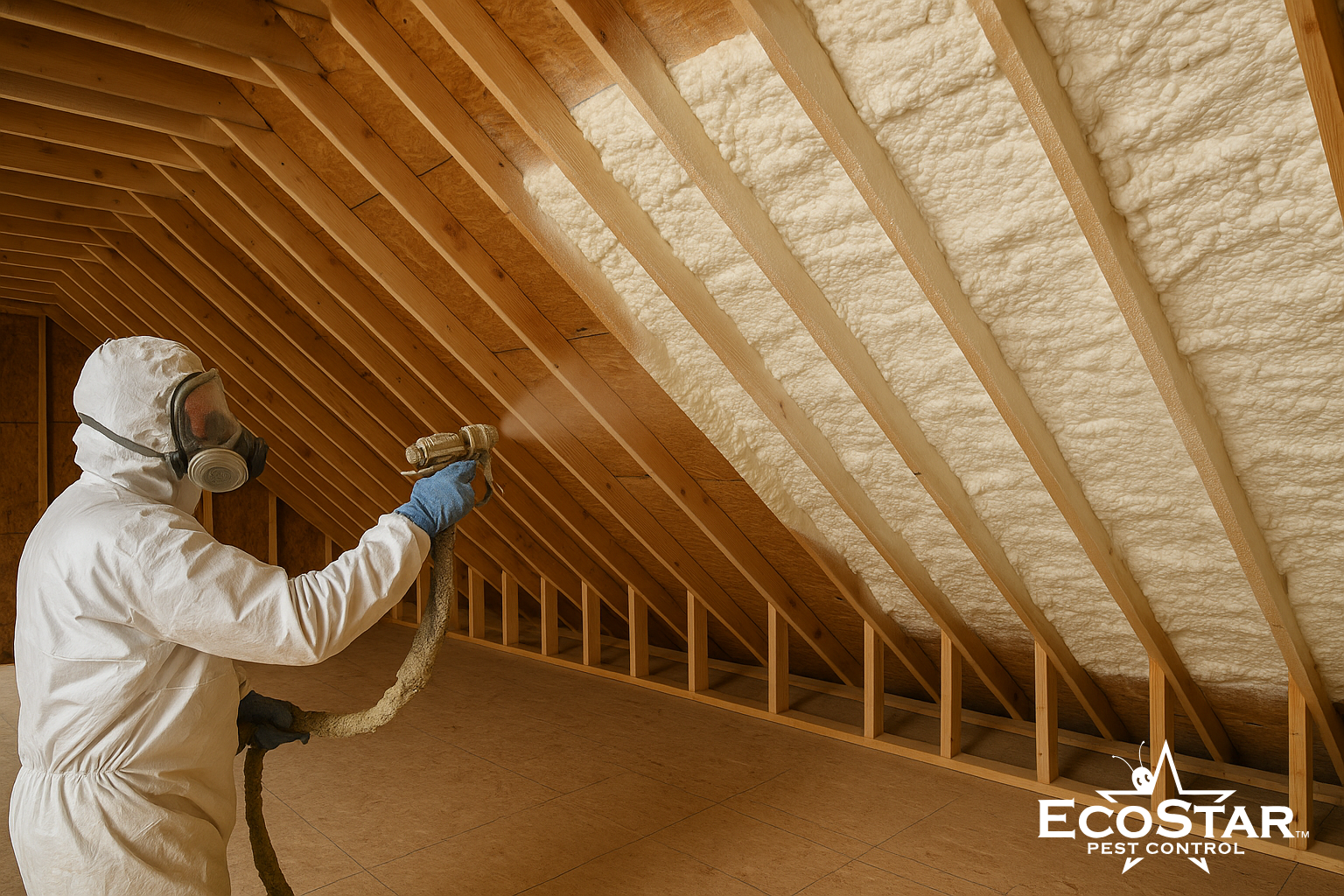
The best attic insulation for your home depends on your budget, the attic’s design, energy-efficiency goals, and the condition of any existing insulation. Fiberglass and cellulose are good options for many attic floors, while spray foam insulation can provide both insulation and air sealing when applied in the right areas. For homeowners in Dallas-Fort Worth, choosing the right material means considering North Texas heat, ventilation, moisture control, and installation quality.
EcoStar Pest Control helps homeowners find attic insulation solutions that contribute to indoor comfort and energy savings. Understanding the differences between insulation materials can help you make the right decision before upgrading your home.
Which Attic Insulation Is Best for Homes in Dallas–Fort Worth?
There is no single best insulation material for every home. Fiberglass is often a practical choice for traditional attic floors, cellulose can provide uniform coverage in hard-to-reach areas, and spray foam may be the right option when air sealing or roof-deck insulation is the priority.
The right insulation attic solution depends on several factors:
- Budget: Compare material, labor, preparation, and removal costs.
- Existing insulation: Determine whether the current material can remain in place or needs replacement.
- Energy efficiency: Consider the required R-value and opportunities to seal air leaks.
- Attic design: A vented attic floor and an insulated roof deck require different approaches.
- Moisture and ventilation: Correct leaks and other moisture problems before adding insulation.
A qualified insulation contractor can inspect these conditions and help you compare suitable materials for your property.
Why Does Attic Insulation Matter in North Texas?
Summers in Dallas-Fort Worth are intense; therefore, without proper insulation in the attic, the heat radiating from it can make living spaces uncomfortable and increase the demand on air conditioning. Insulation slows the flow of heat, thereby reducing the amount of heat entering the home from the attic.
However, insulation is just one component of an energy-efficient home. Air leaks around roof vents, attic access points, plumbing pipes, and wiring can allow unwanted air exchange. Proper air sealing and correctly installed insulation work together to enhance thermal performance.
Upgrading your attic may help you:
- Maintain more consistent indoor temperatures.
- Reduce unnecessary heating and cooling demand.
- Improve comfort in rooms beneath the attic.
- Address gaps or missing insulation.
- Support better overall home energy performance.
Actual energy savings depend on your home’s construction, HVAC system, climate, insulation levels, and installation quality. Before choosing a material, evaluate the entire attic assembly rather than focusing on insulation alone.
How Do Fiberglass, Cellulose, and Spray Foam Compare?
Fiberglass, cellulose, and spray foam each offer different advantages. Compare the materials based on the intended application, required performance, and total installed cost.
| Feature | Fiberglass | Cellulose | Spray foam |
|---|---|---|---|
| Common forms | Batts and loose-fill | Blown-in loose-fill | Open-cell and closed-cell foam |
| Typical applications | Attic floors and ceilings | Attic floors and irregular spaces | Selected cavities and roof decks |
| Air sealing | Limited on its own | Limited on its own | Can provide an air barrier when properly installed |
| Relative upfront cost | Generally lower | Generally moderate | Generally higher |
| Main consideration | Coverage and installation quality | Moisture and consistent coverage | Professional installation and assembly design |
Actual costs and performance vary by product, thickness, labor, and project requirements.
Is Fiberglass Insulation a Good Choice for Attics?
Fiberglass insulation is made from fine glass fibers and is available in the form of batts, rolls, and loose-fill. It is widely used for home insulation projects because it offers an easy way to improve thermal resistance without altering the existing attic design.
Best for: Homeowners upgrading easily accessible attic floors or adding insulation to traditional ceiling assemblies.
Fiberglass batts are designed to fit between framing members, whereas loose-fill fiberglass can cover large areas. To ensure optimal performance, the material must be installed evenly, without gaps or excessive compression.
Fiberglass alone does not prevent air leakage. Before installing the insulation, seal any holes in the ceiling and gaps around attic access points. At the same time, ensure that necessary ventilation pathways remain unobstructed.
When Is Cellulose or Blow-In Insulation the Better Option?
Cellulose insulation is typically made from recycled paper fibers treated with fire-retardant chemicals. It is usually installed as a loose-fill material using specialized blowing equipment.
Blow-in insulation can cover irregular areas of the attic floor and fill spaces around framing, pipes, and other obstructions. Since both cellulose and fiberglass are available in blow-in forms, do not expect uniform performance from all loose-fill materials; instead, compare product specifications.
Best for: Existing attics where uniform coverage around obstructions is important.
Before installing cellulose, inspect the attic for signs of roof leaks, wet insulation, and moisture damage. Cellulose should not be used to conceal underlying problems. Address air leaks and other structural issues before installing the material.
Is Spray Foam Insulation Worth the Cost?
Spray foam insulation expands upon application, filling specific areas and providing thermal resistance (the ability to resist heat or cold). Open-cell and closed-cell foams differ in density, moisture behavior, and insulation performance; therefore, selecting the right product is crucial.
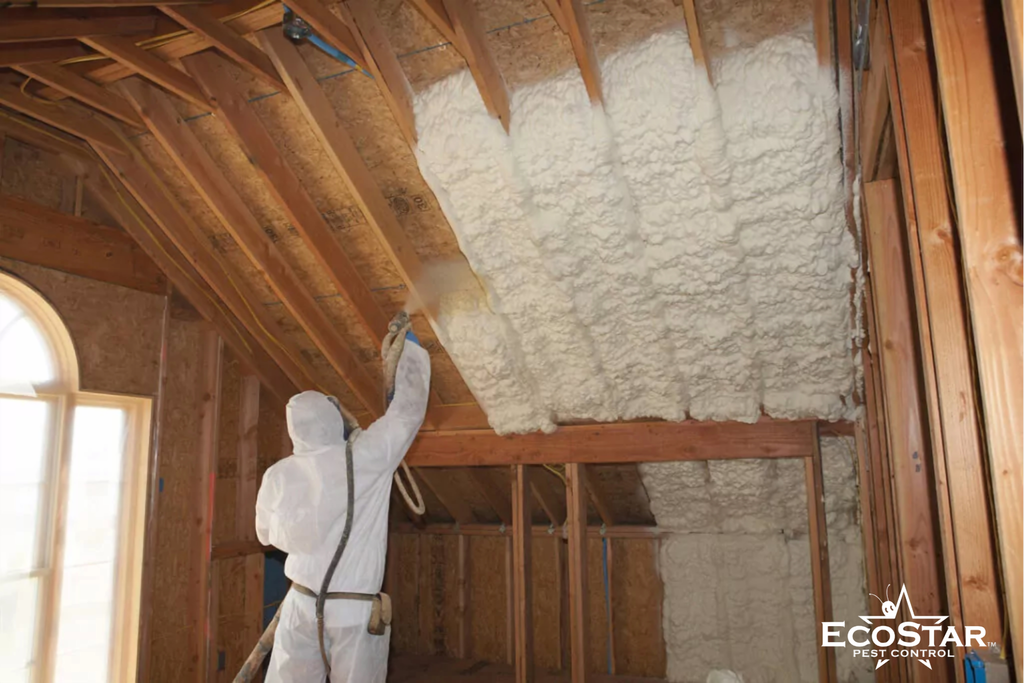
Best for: Projects requiring air sealing in specific locations or professionally designed roof-deck insulation systems.
Generally, spray foam has a higher initial cost compared to traditional loose-fill materials. Its value depends on the building structure, the quality of installation, and the specific issue the project aims to address.
Professional installation is particularly important when insulating roof decks or converting an attic from a vented to an unvented design. Factors such as ventilation, moisture management, fire safety, and HVAC requirements must also be considered.
How Do You Choose the Right Home Insulation?
Choosing the right home insulation starts with identifying your home’s needs instead of selecting a product based on popularity alone.
- For a straightforward attic-floor upgrade: Compare fiberglass and cellulose based on cost, coverage, and the required R-value.
- For air leakage problems: Seal appropriate gaps before adding insulation. Spray foam may be suitable for selected areas, but other air-sealing methods can also work.
- For a roof-deck project: Have a professional assess the roof assembly, ventilation strategy, moisture control, and HVAC system.
- For an older attic: Check for deteriorated material, water damage, and pest contamination before deciding whether to reuse or remove insulation.
- For improved energy efficiency: Review the existing insulation depth, air leaks, and overall thermal envelope together.
R-value measures resistance to heat flow. The appropriate total R-value depends on the climate zone, existing insulation, building design, and applicable recommendations or requirements. Consult the U.S. Department of Energy and ENERGY STAR when planning upgrades.
When Should You Consider Insulation Removal or Replacement?
It is not necessary to completely remove old insulation from every attic. If the existing insulation is dry, reasonably clean, and suitable for the attic’s structure, it can be reused or supplemented with additional insulation.
A professional inspection may be worthwhile if you notice:
- Wet insulation or signs of roof leaks.
- Persistent odors or evidence of rodent nesting.
- Compressed, displaced, or missing insulation.
- Uneven indoor temperatures or unexpectedly high energy bills.
- Visible mold or damaged roof framing.
Issues such as dampness, roof leaks, and pest infestations should be addressed before installing new material. Simply covering up defective insulation can make it difficult to identify the root cause of the problem.
Old vermiculite insulation requires special attention, as some vermiculite products may contain asbestos. Do not disturb any material suspected of containing asbestos until it has been properly tested.
Depending on the assessment, the best solution might involve repairing specific areas, adding extra insulation, or removing and replacing it. Before approving the work, ask for a clear explanation as to why removal is necessary.
How Do You Choose the Right Insulation Company?
When comparing an insulation company in Dallas–Fort Worth, look beyond the lowest advertised price. A reliable service provider should assess the current condition of your attic and explain the recommended materials, installation depth, and necessary preparations.
Before approving insulation installation, ask these questions:
- What is the existing insulation’s condition and approximate R-value?
- What total R-value do you recommend, and why?
- Does the project include air sealing or only insulation?
- Will existing insulation need removal?
- Are there moisture, ventilation, or pest-related concerns?
- What materials, labor, and additional services are included in the estimate?
Request an itemized written estimate so you can compare proposals fairly. Confirm that the installer follows manufacturer specifications and applicable building requirements.
EcoStar Pest Control serves homeowners exploring attic insulation solutions in Dallas, Fort Worth, and surrounding communities. Contact the team to discuss your attic’s condition and determine the appropriate next steps for your project.
Frequently Asked Questions About Attic Insulation
What is the best attic insulation for Texas heat?
Both fiberglass and cellulose can be good options for a properly insulated attic floor. Spray foam may be the right choice when air sealing or roof-deck insulation is required. The best option depends on your attic’s design, your budget, and the required R-value.
Is fiberglass insulation better than spray foam insulation?
No single material is best for every home. Fiberglass is often a practical choice for traditional attic floors, while spray foam can help with air sealing in the right areas. Compare installation costs, performance requirements, and the building’s structure before making a decision.
Is blow-in insulation good for an existing attic?
Yes. Blown-in cellulose or fiberglass can fill irregular spaces and provide better, more uniform coverage around obstructions. Before installation, check the existing material for moisture, dirt, and damage.
How much does attic insulation cost in Dallas–Fort Worth?
The cost depends on the size of the attic, the type of insulation, the required depth, accessibility, labor, air sealing, and the need to remove existing materials. Instead of relying on a general price, request a detailed estimate based on an inspection.
Can you install new insulation over old insulation?
Yes, in some cases. The existing insulation should be dry, reasonably clean, and suitable for the attic structure. Before installing new material, address any moisture damage, pest issues, and other hidden problems.
When is insulation removal necessary?
It may be appropriate to remove insulation if it is wet, severely damaged, contaminated, or no longer fit for use. A professional inspection can help determine whether complete removal is necessary or if the existing material can be left in place.
Does attic insulation help reduce energy bills?
Properly installed insulation can reduce heat transfer and help lower the need for heating and cooling. Actual savings depend on the home’s existing insulation, air leakage, HVAC efficiency, and other factors.