People typically search for a “pest control company near me” only when the situation has become quite dire—such as discovering a line of ants on the kitchen counter before heading to work, finding a wasp nest near the front door, or hearing scratching sounds coming from the attic after dark. The good news is that choosing the right company isn’t as difficult as it might seem. Once you know what criteria to use for comparison, you can cut through the clutter of advertisements and find a service that can truly solve your problem—whether you are in Dallas, Fort Worth, or Carrollton.
Why “near me” matters more than you think
When it comes to pest control, being local matters—perhaps more so than with many other types of services. If your pest control provider is based far away, you might face long waits for urgent requests, receive inadequate follow-up, or deal with technicians who lack an understanding of the specific pest issues common to your local area.
This is especially true in Texas. The warm climate here leads to an extended pest season; heavy rainfall can trigger sudden surges in mosquito populations; and the nature of pest problems can vary significantly from one neighborhood to another, depending on factors like the presence of trees, drainage systems, the age of homes, and the proximity of vacant land. A company that regularly serves areas like Dallas-Fort Worth or Carrollton will already be familiar with the typical pest challenges in those locations. You won’t have to waste ten minutes explaining that there’s a wooded area behind your home, which has suddenly brought an influx of spiders, wasps, or rodents.
Furthermore, if a pest problem persists after the initial treatment, it is much easier to coordinate with a local company. The reality is that pest control often requires more than a single visit. If cockroaches reappear in your kitchen after a rainstorm, or if mosquitoes begin swarming around your patio, you want the follow-up process to be simple—rather than having to navigate a call center located several towns away.
Start with the pest problem you need fixed
Before comparing companies, clearly define your own needs. This may sound simple, but it is precisely where many people go wrong. You search for pest control, call the first company you find, and end up with a package that looks attractive but fails to address your specific problem.
Standard pest control typically covers ants, cockroaches, mosquitoes, termites, and other common household pests. Dealing with rodents—which may involve setting traps, sealing entry points, and inspecting or cleaning attics—is a completely different process from simply spraying the exterior of a property. Lawn pest issues are another matter entirely; for instance, in places like Texas, lawns can face complex, simultaneous challenges such as chinch bugs, grubs, and turf stress.
It is important to note that a company well-suited for termite treatment may not be the best choice for routine pest control. A firm might specialize in quarterly pest prevention, yet still not be the ideal provider for handling a severe rodent infestation in a garage or controlling active termite activity around a slab foundation.
One-time pest problem or ongoing protection?
When a pest problem is localized and clearly defined, a ‘one-time service’ is often the best approach. Examples include a wasp nest under the eaves of your roof, a sudden trail of ants appearing near a window, or an influx of spiders following the rainy season. In such cases, you simply need a targeted treatment and a few preventive measures for that specific area.
If a problem persists—as is frequently the case in Texas—a ‘recurring service plan’ is a better option. If the environment around your home consistently attracts pests like cockroaches, ants, mosquitoes, or spiders, they are likely to return. In such situations, rather than waiting for a new issue to arise each time, it is more convenient to have regular, scheduled service—especially during the long, warm season when pests are almost always present.
It is important to note that regular service should not merely be a ‘subscription’; it should serve a clear, practical purpose—specifically, addressing a recurring pest issue. If factors like the local climate, the surrounding environment, or the structure of your home cause pests to keep coming back, then ongoing service is a sensible choice. Conversely, if you have encountered a one-off issue, such as a single wasp nest, and there are no other ongoing problems, then committing to a year-round plan may be unnecessary.
Indoor pests, outdoor pests, or lawn care?
Not every pest control company handles every part of a property in the same way. Some companies focus primarily on pest control inside the home and its immediate surroundings. Others specialize in mosquito reduction and pest management for outdoor living spaces. Some companies offer both lawn care and pest control—a useful combination when factors like lawn health, drainage, and pest activity are interconnected.
Choosing the wrong service is like calling a plumber when your roof is leaking; they might show up, but they won’t be able to solve the actual problem. If your primary issue is fleas inside the house, ask about indoor treatments, guidance regarding pets, and follow-up schedules. If mosquitoes have made your backyard unusable, inquire about yard inspections, addressing standing water, treating foliage, and the frequency of follow-up visits. If your lawn is thinning and appears damaged by pests, verify whether the company actually treats lawn-specific pests or simply sprays around the perimeter of your home.
Things to Consider When Choosing a Pest Control Company Near You
This is the part that saves you time. A good pest control company is more than just someone with a truck and a sprayer. You need a provider that offers essential services, possesses local knowledge, communicates clearly, and delivers the right treatment tailored to your specific problem.
Texas licensing and insurance
First, learn about licensing and insurance. Simply put, a license means the company is authorized to perform pest control work in Texas. Insurance means that if an accident occurs on your property, you are protected.
Do not hesitate to ask about this. A legitimate company should be able to confirm its license status and explain the type of coverage it carries. The Texas Department of Agriculture oversees structural pest control licensing—an important detail to be aware of, as it allows you to verify that the business is operating properly.
If a company provides vague answers, look elsewhere. Pest control involves the use of chemicals, access to your property, and, at times, the need to navigate ladders, attics, crawl spaces, or outbuildings. You want a company that treats professionalism as a standard, not an option.
Experience with local Texas pests
Pest infestations in Texas are not uniform. A cockroach problem in a densely populated area of DFW, termites in an older home in Plano, or a mosquito issue in a shaded neighborhood in Carrollton—these are all distinct scenarios. Local expertise means a company should be able to quickly identify pest patterns and know which methods are most effective for your specific area.
When inquiring about local service, look for specific, knowledgeable language. A simple “Yes, we handle that” is not enough; the provider should demonstrate a real understanding of issues such as seasonal ant activity, the prevalence of cockroaches in warm weather, mosquito surges due to moisture, rodent movement during temperature fluctuations, and the threat of termites in established residential areas. The best companies will speak as if they have worked on homes and properties like yours before—because, in fact, they have.
Treatment methods and precautions
You don’t need a degree in chemistry to ask good questions; you simply need straightforward answers. Ask which products are being used, where they will be applied, whether the treatment is for indoors, outdoors, or both, and how long you should wait before allowing children or pets into the treated areas.
The company you are considering hiring should be able to explain the concept of “Integrated Pest Management” (IPM) in practical terms—even if they don’t use that specific phrase. Integrated Pest Management means that pest control is not just about “spraying and leaving.” According to the Environmental Protection Agency (EPA), it involves a combination of prevention, monitoring, and targeted treatment. In practice, this could mean sealing cracks, reducing moisture, trimming back vegetation around the home, adjusting the timing of treatments, and applying treatments only where pests are actually active.
This approach is far superior to the sweeping promise that “a single treatment will eliminate everything.” Pest control is most effective when it addresses the root cause of the problem.
Response time and reliability
When an infestation of pests occurs, immediate action is essential—you cannot afford to wait until next week. Whether it’s mice in the attic, termites around the building, or the sudden appearance of cockroaches, it is crucial to seek professional service in a timely manner. A ‘quick response’ does not necessarily mean ‘same-day service,’ but it should certainly entail scheduling an appropriate time and maintaining clear, open communication.
Reliability is reflected in the small details: providing a specific arrival time, responding promptly to your calls, ensuring the technician arrives fully prepared and explains the work to be done, and remaining available to answer any questions even after payment has been made. Pay attention to these aspects, because in pest control, trust is just as important as the work itself.
How to compare pest control services without getting lost
Search results can quickly become confusing—with similar promises, identical coupons, and the same claims of being the “best.” In such cases, rather than trying to evaluate every single detail, it is better to compare a few key aspects.
Read reviews for patterns, not just stars
A 4.9 rating might look good, but patterns tell the real story. Read enough reviews to identify recurring themes. Do people consistently mention punctuality, clear explanations, and effective follow-up? Or do you keep seeing complaints about missed appointments, unexpected charges, poor communication, or high-pressure upselling?
Google reviews are helpful, but local directories and feedback from neighbors can be just as useful. A review like, “They solved our ant problem after two visits and explained why the mulch was attracting them,” provides far more insight than a generic “great service.” The details matter.
A perfect rating isn’t the goal. Real businesses receive a mix of feedback. What you want is a reliable track record and comments that are relevant to your specific needs.
Check the inspection process
Before devising an effective plan, a thorough inspection is essential. If a company provides a price quote immediately—without asking detailed questions about the problem or examining the affected areas—it should be considered a red flag.
A better approach would involve the following: asking where the pests have been spotted, when they were first seen, how long the issue has persisted, and what measures you have already taken. This should be followed by an inspection of potential entry points—such as damp areas, roof edges, attics, the foundation, or other problem spots around the exterior of the property. Only after these steps is it appropriate to recommend a course of treatment.
In reality, pest control is as much about investigation as it is about treatment. If a service provider isn’t attempting to reach the root cause of the problem, you might simply be paying for a temporary fix.
Ask What’s included in the service
This is where prices that look similar can actually be quite different. One price might include inspections, treatments, follow-ups, and even re-treatments during the warranty period, while another might cover only a basic perimeter spray.
Ask clearly what the service includes: the initial visit, the number of follow-up visits, the terms for re-treatment, warranty coverage, nest removal, rodent trapping, exclusion work (sealing entry points to keep pests out), termite monitoring, or follow-up visits for mosquito control. If you are considering a regular service plan, ask what happens if pests return between the scheduled visits.
The true value of a price only becomes clear when you know exactly what you are getting in return.
Questions to ask before you book
A few good questions can save you from wasting time on the wrong company. Keep it simple and ask the same core questions each time so the comparison stays clean.
What pests do you treat most often in my area?
This question does two jobs at once. It checks local experience, and it shows whether the company really works in your area or just advertises there.
You want to hear answers that sound tied to place. In Waco, maybe ants, roaches, mosquitoes after rain, and termite concerns in older neighborhoods. In parts of DFW, maybe apartment-adjacent roaches, perimeter ants, rodents, and mixed lawn issues. If the answer sounds generic, that tells you something.
How many visits will this take?
Some pest issues can improve after one treatment. Some need several rounds, plus changes around the property to keep the problem from returning. You should know that upfront.
A clear answer builds trust. If a company explains that fleas often need more than one visit, or rodent work may require inspection, trapping, exclusion, and follow-up, that is useful. If you get a vague promise that one visit should handle everything no matter the pest, be careful.
Do you offer a service guarantee or free re-treatments?
There is a big difference between “call us if you need anything” and an actual service guarantee. Ask what happens if pests return during the covered period. Are return visits included? Is there a limit? Does the guarantee apply to all pests treated or only certain ones?
This matters because pest control is not always instant. Some treatments need time, and some pest cycles require follow-up. You should know where the company stands before booking, not after the bugs are back.
Will you recommend repairs or prevention steps too?
The best companies do more than apply treatment. You want someone who notices the gap under the back door, the branch touching the roofline, the standing water near the patio, or the moisture issue that keeps drawing pests in.
That kind of advice is practical, and it usually signals better long-term results. Pest control works better when treatment and prevention are working together.
Understanding pest control pricing in Texas
Pest control pricing can feel all over the place until you know what drives it. And yes, prices vary across Texas, but the logic behind them is pretty consistent.
What affects the price
Cost usually changes based on the size of the home or building, the type of pest, how heavy the activity is, and how often service is needed. Yard size matters for mosquito control. Termite work can cost more because of inspection depth, treatment method, and monitoring. Rodent jobs may involve traps, sealing entry points, attic work, and repeat visits.
Cheap quotes vs real value
The lowest price is not always the best deal. A cheap quote that skips inspection, offers weak follow-up, or uses a one-size-fits-all treatment can cost more later when the problem keeps coming back.
Think of it like patching a roof with tape instead of fixing the leak. It looks cheaper for about five minutes. Then rain shows up and you are paying again.
Real value usually means the company identified the problem correctly, explained the treatment clearly, included realistic follow-up, and gave you enough prevention guidance to keep pests from bouncing right back.
Monthly, quarterly, and one-time plans
Monthly plans usually make sense for higher-pressure situations, especially mosquito control, heavy outdoor activity, or properties that need closer monitoring. Quarterly plans are common for general pest prevention and often work well for routine coverage around homes in Texas.
One-time plans fit isolated issues, but only when the problem is actually isolated. If you keep seeing the same pests every few weeks, a one-time visit can turn into repeat spending without the structure of a regular plan.
The right choice depends on the pattern, not just the price. If the issue is recurring, regular service may be cheaper and less frustrating over time.
Choosing the right company for your situation
The best choice depends on what kind of property you have and what kind of pest pressure you are dealing with. That is how most people actually shop, and it is a better approach than chasing the loudest ad.
Best for homes with kids and pets
For a busy household, clear communication matters as much as the treatment itself. You want a company that explains where products are going, what re-entry time looks like, and what simple changes around the home could reduce pest activity.
Rather than spraying indiscriminately everywhere, it is wiser to target specific areas for treatment. Additionally, certain practical measures can be very effective—such as trimming bushes near the house, storing pet food carefully, or addressing dampness under the sink, which often attracts ants.
Best for businesses and commercial properties
Commercial properties need pest control that works quietly in the background. Fast response matters, but so do documentation, recurring service schedules, and treatment plans that fit around daily operations.
If you manage an office, restaurant-adjacent space, or multi-unit property in DFW, ask about service records, discreet scheduling, and how emergency calls are handled. A pest issue that interrupts business can get expensive fast.
Best for termites, rodents, or mosquito control
These problems usually need more than a basic general pest package. Termites can involve specialized inspection and long-term treatment strategy. Rodents often require trapping plus exclusion, meaning sealing up how the pests are getting in. Mosquito control works best when the yard is part of the plan, not just a quick spray.
If your primary issue falls under one of these categories, choose a company that views it as an ‘area of expertise’ rather than just an ‘add-on service.’
Local tips for Carrollton, Dallas-Fort Worth and Plano
The same pest service plan will not fit every property, even within the same region. Weather, lot size, neighborhood age, and surrounding land all change what pest pressure looks like.
Carrollton
Carrollton often deals with steady warm-weather ant and roach activity, plus mosquito pressure after rain. Older homes and established neighborhoods can also bring higher termite concern, especially where moisture has had time to become part of the story.
If your property sits near mature trees or older landscaping, ask companies how they handle repeat exterior activity, not just indoor complaints.
Dallas-fort worth
Dallas-Fort Worth covers a huge mix of property types. Urban homes, suburban neighborhoods, apartment-adjacent properties, offices, and larger commercial sites all create different pest patterns.
That means flexibility matters. You may need a company that can handle perimeter treatments, shared-wall pest migration, larger lawns, and fast service scheduling in a busier market. A company that sounds great for one kind of property may not be the right fit for another.
Plano
Plano Creek properties often deal with more wooded or open surroundings, which can mean stronger pressure from rodents, spiders, wasps, and mosquitoes. Outbuildings, tree cover, and moisture pockets can keep pests close even when the house itself is well maintained.
In these settings, prevention steps matter a lot. Ask about tree contact, storage areas, gaps around sheds, drainage, and how treatment extends beyond the immediate foundation line.
A simple shortlist process you can use today
You do not need to become a pest control expert to make a smart choice. Use a short process and stick to it.
First, identify the specific problem. Don’t just say “bugs” or “insects”—be precise: are there ants in the kitchen, mosquitoes in the yard, scratching sounds coming from the attic, or is there a suspicion of termites near the slab? This will help you determine what type of pest control service you need.
Next, pick local companies serving your area in Dallas-Fort Worth. Read reviews for patterns, check licensing, and pay attention to how each company handles the first conversation.
Then compare inspection quality, clarity, and follow-up terms before comparing price alone. The company that asks better questions and gives clearer answers is often the better bet.
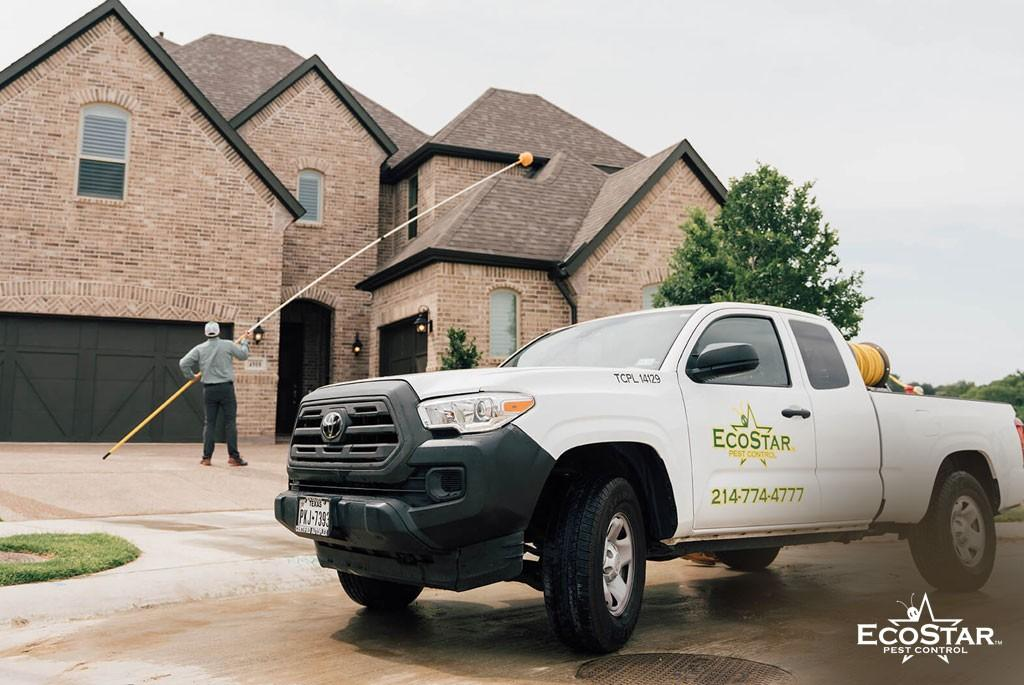
If you’re looking for reliable pest control services in Dallas-Fort Worth, EcoStar Pest Control is here to help. With local expertise and customized pest control solutions, EcoStar makes it easier to protect your home and keep unwanted pests under control.
Reach out to EcoStar Pest Control today to discuss your pest concerns and find the right solution for your property.