Scratching, scurrying or gnawing in your attic at night during winter usually means rats or mice have moved in. Rodents are mostly nocturnal, so their noises peak after dark. Squirrels are active during the day instead. To confirm it, look for droppings, tunnels in your attic insulation, gnaw marks and entry holes along the roofline. If you find them, act quickly. Rodents breed fast and damage insulation and wiring.
Here’s how to work out what’s in your attic, what the signs mean, and what to do next if you live in Dallas, Fort Worth or nearby.
What Causes Scratching Sounds in the Attic at Night?
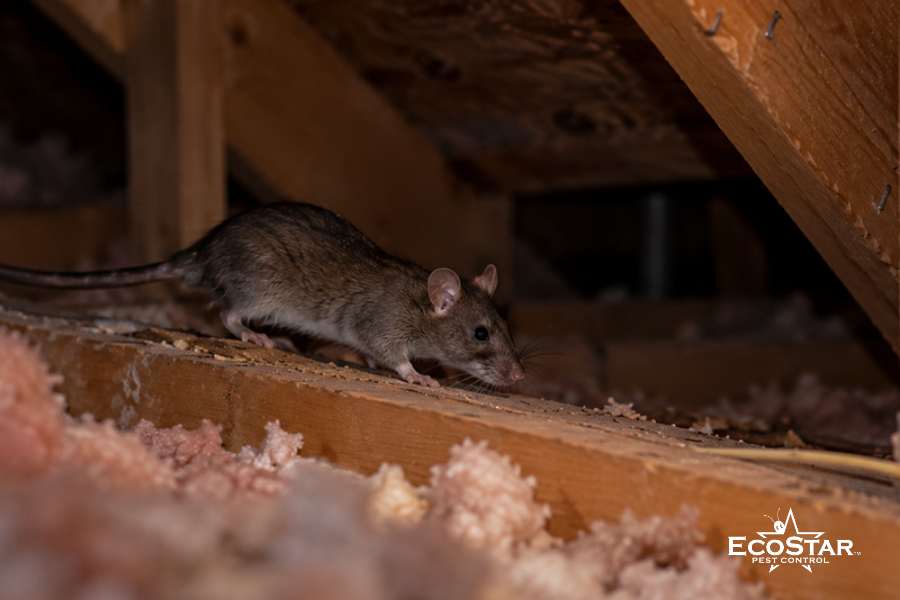
In North Texas winters, the most common cause is rats in the attic, especially roof rats. Roof rats prefer to live above ground and nest in attics and upper walls. Texas A&M AgriLife Extension describes them as common in urban areas of East Texas and across the South.
Rodents move indoors as temperatures drop. The National Pest Management Association estimates they invade 21 million U.S. homes each winter. The noises you hear are usually:
- Scratching: claws gripping wood, drywall or ductwork
- Scurrying: rodents running along rafters, joists or the top plates of walls
- Gnawing: teeth on wood, wiring or stored boxes
- Rustling: nest-building in insulation or stored paper
Is It Rats, Mice, Squirrels or Raccoons?
Timing is the best first clue. Use this table as a starting point:
| Animal | When you hear it | What it sounds like |
|---|---|---|
| Rats or mice | Mostly at night | Light scratching, scurrying, gnawing, occasional squeaks |
| Tree squirrels | Daytime, especially early morning and evening | Running, rolling or dragging sounds (nuts), chattering |
| Raccoons | Mostly at night | Heavy thumping or walking, growling, chattering |
One caution: sound alone isn’t proof. The Internet Center for Wildlife Damage Management warns that noises are not a very accurate way to identify the species. Confirm with the physical signs below before choosing a treatment, because rats, squirrels and raccoons each need different control methods.
What Are the Signs of Rodents in the Attic?
Check for these six signs. Two or more together is strong evidence of an active infestation.
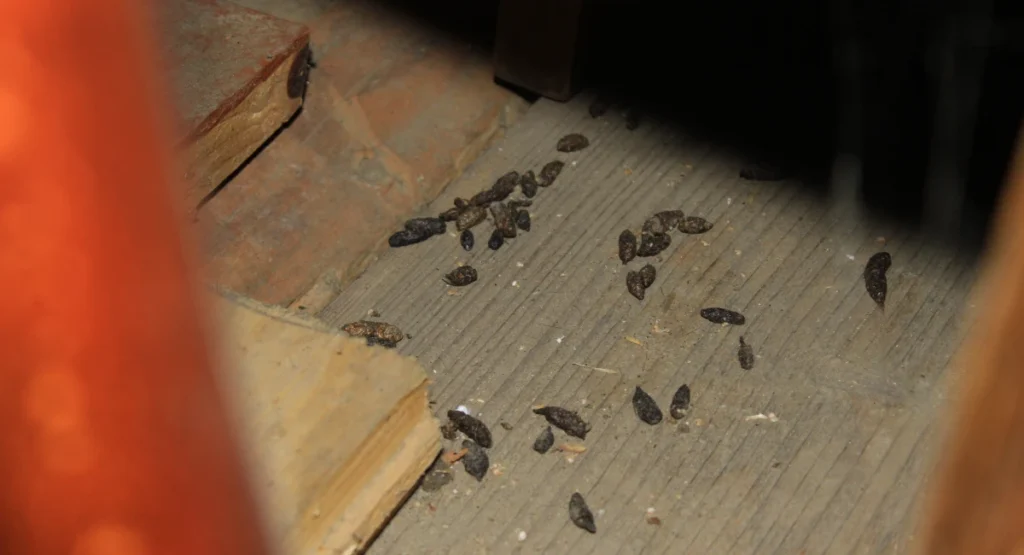
Droppings
Droppings are the most reliable sign. Rat droppings are about ½–¾ inch long with blunt ends. Mouse droppings are about ¼ inch, pointed and rice-shaped (Orkin). Look along the eaves, near the attic hatch, beside stored boxes and on top of insulation. Fresh droppings are dark and moist; old ones are dry and crumbly.
Damaged or Tunneled Attic Insulation
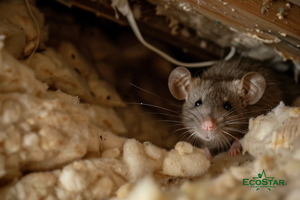
Rodents burrow into blown-in and batt attic insulation to nest. Look for tunnels, flattened pathways, shredded patches and yellow urine stains. Compressed or soiled insulation also insulates less effectively, which can show up as rooms that are harder to heat or cool.
Gnaw Marks and Chewed Wiring
Rodent teeth never stop growing, so they gnaw constantly. Look for fresh, light-colored wood, chewed cardboard and stripped wire insulation. Texas A&M notes that rats chewing attic wiring creates a fire risk.
Rub Marks and Runways
Rats follow the same routes every night. Oil and dirt from their fur leave dark, greasy smudges along rafters, beams and around entry holes. Trails worn into insulation show their main runways.
Nests and Odor
Nests are loose balls of shredded insulation, paper or fabric, usually in a protected corner or near the eaves. A heavy infestation often has a strong, musky, ammonia-like urine smell.
Entry Holes Outside
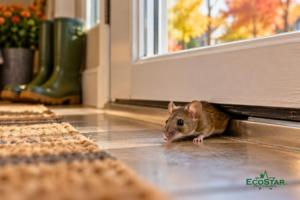
Check the roofline from the ground. Look for gaps at roof returns, soffits, fascia, vents and utility lines, often with dark rub marks around the edge. Texas A&M AgriLife Extension notes a rat can fit through a hole about the size of a quarter, and a mouse one about the size of a dime.
How Do You Check Your Attic Safely?
A quick look can confirm the problem. Take these precautions:
- Wear gloves, long sleeves and a well-fitting mask. Rodent droppings and urine can carry disease.
- Use a bright flashlight and step only on joists or attic flooring.
- Don’t disturb droppings or nests. The CDC warns against sweeping or vacuuming rodent droppings, urine or nests, because this can put virus particles into the air.
- Take photos of droppings, damage and suspected entry points. They help a technician identify the species quickly.
- Keep visits short and avoid the attic in midday heat or if you have breathing problems.
If you can’t reach parts of the attic safely, stop and call a professional.
Why Shouldn’t You Ignore Rodents in the Attic?
A few noises can become a serious problem within weeks.
- They multiply fast. Texas A&M advises acting when there’s evidence of even one mouse, because a single pair can quickly become an infestation.
- Fire risk. Rats gnaw electrical wiring in attics.
- Insulation damage. Soiled, tunneled insulation loses performance and often needs removal and replacement.
- Health risk. Rodents contaminate surfaces with urine and droppings, and particles can become airborne when disturbed.
- They spread. Rodents in the attic move down through wall voids into kitchens and pantries.
Most homeowners wait. An NPMA survey found only 17% of Americans call a pest professional at the first sign of rodents.
What Should You Do Next?
Tonight:
- Note what time the noises happen and where in the ceiling they come from.
- Move pet food, bird seed and pantry goods into sealed metal or thick plastic containers.
This week:
- Inspect the attic safely (above) and the roofline from outside.
- Set snap traps along rafters and near droppings. Texas A&M recommends using more traps than you think you need and checking them daily.
- Trim tree branches and vines touching the roof.
Don’t:
- Seal every entry hole while rodents are still inside. They’ll be trapped in your walls.
- Sweep or vacuum droppings.
- Leave loose poison bait in the attic. Rodents that die in hidden spaces cause odor and fly problems.
When Should You Call Attic Exterminators?
Call professional attic exterminators if:
- Noises continue after a week of trapping
- You find droppings in several areas of the attic
- Insulation is heavily tunneled or soiled
- You see chewed wiring
- Entry points are on the roof or high gables
- You’re not sure whether it’s rats, squirrels or raccoons
A professional rodent exterminator will inspect the attic and roofline, confirm the species, remove active rodents, seal entry points with rodent-proof materials, and return to confirm the attic is clear.
Frequently Asked Questions
What does a rat in the attic sound like?
Rats make light scratching, scurrying and gnawing sounds, mostly at night. You may also hear occasional squeaks or something being dragged across insulation.
Why do I only hear noises in the attic at night?
Rats and mice are mostly nocturnal, so they’re most active after dark. Daytime noises point more toward squirrels.
Can one mouse make that much noise?
Yes. Sound carries through ceilings and ductwork, so even one or two rodents can sound much bigger. Check droppings to judge how many there are.
Will rodents in the attic go away on their own?
Rarely. Once rodents find shelter and food, they stay and breed. Waiting usually means a larger infestation and more damage.
Can rodents damage attic insulation?
Yes. They tunnel through it, compress it and soil it with urine and droppings. Damaged insulation performs worse and may need replacing.
Is it safe to go into the attic if I have rodents?
A brief inspection is fine with gloves, a mask and a flashlight. Don’t touch, sweep or vacuum droppings or nests. Leave heavy contamination to a professional.
Attic Pest Control in Dallas and Fort Worth
Scratching overhead at night is your earliest warning. Identify the culprit, confirm it with droppings and damage, and act before rodents settle in for the winter.
EcoStar Pest Control provides attic pest control and rodent control for homes across Dallas, Fort Worth and surrounding areas. Our technicians inspect your attic and roofline, identify what’s living there, remove active rodents and seal entry points. If rodents have damaged your insulation, our Attic Insulation service can replace it with pest-control insulation.
Hearing scratching sounds in the attic? Contact EcoStar Pest Control to book an inspection for Rodent Control Dallas and Fort Worth homeowners can rely on.