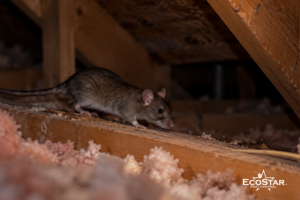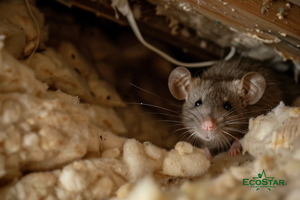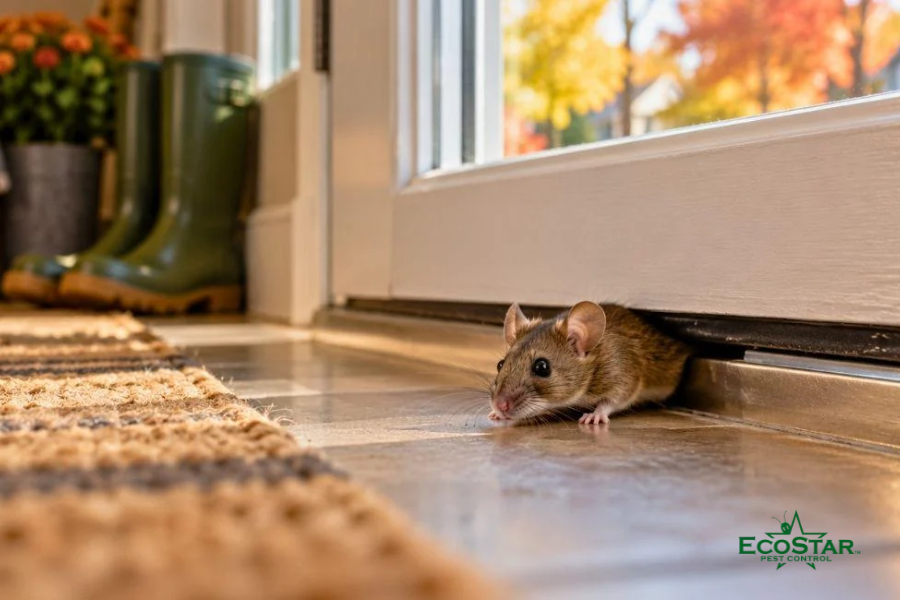
Rats and mice enter homes in winter to find warmth, steady food and a safe place to nest. They don’t hibernate, so when nights turn cold, they look for shelter — and your attic, walls and garage offer all three. In Dallas–Fort Worth, even a mild winter with a few cold snaps is enough to push rodents indoors. If you’re hearing scratching overhead or finding droppings in the pantry, a small problem can become a full rodent infestation within weeks.
Nationally, rodents invade an estimated 21 million homes every winter, according to the National Pest Management Association (NPMA). Here’s why it happens, how to tell what you’re dealing with, and what actually works for rodent control in North Texas.
Why Do Rodents Move Indoors When It Gets Cold?
Rodents move indoors because winter takes away the things they need to survive outside. A house replaces all of them at once.
Warmth and Shelter
House mice and rats don’t hibernate. According to Texas A&M AgriLife Extension, house mice live outside in summer and nest in warm areas close to food. When temperatures drop, wall voids, attics and spaces behind appliances become their winter shelter.
Reliable Food and Water
Outdoor food sources thin out in winter. Inside, rodents find pet food, pantry goods, crumbs, bird seed in the garage and water from leaky pipes or pet bowls. Mice need very little water, so a small food source can sustain a growing population.
Safe Places to Nest and Breed
Attic insulation, stored boxes and clutter make ideal nesting material. Mice breed fast — Texas A&M advises taking action at the first sign of even one mouse, because a single pair can quickly become an infestation.
Do North Texas Winters Really Drive Rodents Inside?
Yes. DFW doesn’t need snow to have a rodent season. Cooler fall nights start the move indoors, and sudden cold snaps or hard freezes speed it up. After past North Texas freezes, local pest companies reported sharp spikes in roof rat calls from attics (NBC DFW).
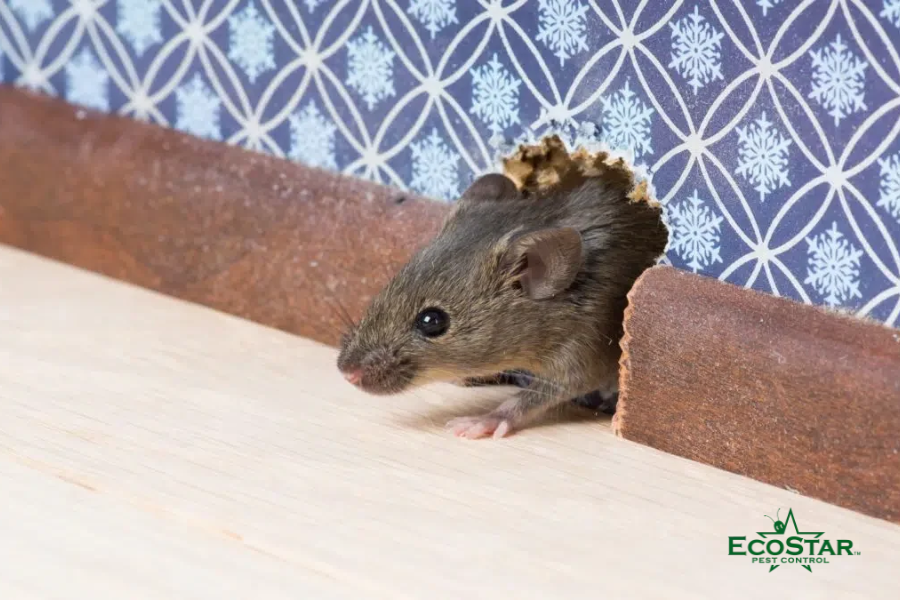
Two local factors matter:
- Mature trees and landscaping. Older Dallas and Fort Worth neighborhoods have pecan and oak trees, vines and fences — perfect highways for roof rats to reach rooflines. A Texas A&M AgriLife scientist noted to the Dallas Observer that aging neighborhoods are exposing more residents to rats.
- Slab foundations. Most DFW homes don’t have basements, so rodents usually get in through the roofline, garage door, siding gaps and utility penetrations instead.
Rat vs Mouse: Which One Is in Your House?
People often search rat vs mice vs mouse because the answer changes the treatment. Traps, bait placement and exclusion details differ by species. The three most common home invaders in North Texas, per Texas A&M AgriLife, are the house mouse, roof rat and Norway rat.
| House mouse | Roof rat | Norway rat | |
|---|---|---|---|
| Look | Small, slender, light brown to gray | Sleek body, large eyes and ears, tail longer than body | Heavy body, blunt nose, small eyes, tail shorter than body |
| Where in the home | Walls, cabinets, behind appliances, pantry | Attics, eaves, upper walls, trees | Ground level: under slabs, foundations, woodpiles, garages |
| Entry gap | About the size of a dime (¼-inch under a door) | About the size of a quarter (½-inch) | About the size of a quarter (½-inch) |
| Clue | Activity in kitchen and lower walls | Scurrying overhead at night | Burrows along the foundation |
Quick rule: noises in the ceiling or attic usually point to roof rats; activity low in the kitchen points to mice. Roof rats are common in Dallas because they prefer to travel above ground through trees and rooflines.
How Do Rats and Mice Get Inside?
Rodents squeeze through gaps far smaller than most homeowners expect. The CDC lists these common entry points:
- Roof rafters, gables, eaves and soffits
- Attic and crawl space vents
- Gaps around doors and windows without weather stripping
- The gap between the foundation and the ground
- Holes around electrical, plumbing, cable and gas lines
In DFW homes, also check the corners of garage doors, roof vents and flashing, and ground-level gaps under siding — all common roof rat entry points noted by Texas A&M’s Insects in the City.
What Are the Signs of Rodents in Your Home?
You may never see a rodent until the problem is large. Watch for:
- Scratching or scurrying in walls or the attic, mostly at night
- Droppings in cabinets, under sinks, along walls or in the attic
- Gnaw marks on wood, wiring, food packaging or storage boxes
- Grease rub marks along walls and beams where rodents travel
- Nests made of shredded paper, fabric or insulation
- Pets alerting — staring at walls or pawing at appliances
- Urine odor in enclosed spaces
Daytime sightings are a red flag. Texas A&M notes that most rodents feed at night, so daytime activity often signals a large infestation.
Why Is a Winter Rodent Problem Risky?
Rodents aren’t just a nuisance. They create three kinds of risk:
- Health: Rodents contaminate food and surfaces and can carry disease. The CDC warns that disease spreads mainly when people breathe in contaminated air, so don’t sweep or vacuum droppings. Wear gloves, spray with disinfectant and wipe up with paper towels (CDC).
- Fire: Rats gnaw on electrical wiring in attics, which creates a fire risk.
- Property damage: Rodents chew wood, pipes and stored items and tunnel through attic insulation, soiling and compressing it. Damaged insulation loses efficiency and often needs replacing once the rodents are gone.
How Can You Keep Rodents Out This Winter?
Prevention works best before temperatures drop, but it’s never too late. Follow these steps:
- Seal small holes with steel wool held in place by caulk or spray foam.
- Patch larger gaps with hardware cloth, metal sheeting, lath screen or cement.
- Add door sweeps and weather stripping, including the garage door.
- Screen attic vents and check roof flashing.
- Trim tree limbs and vines away from the roof and walls.
- Store food and pet food in airtight plastic or metal containers.
- Move woodpiles and compost away from the house; the CDC recommends keeping woodpiles raised and well away from the home.
- Declutter garages and attics to remove nesting sites.
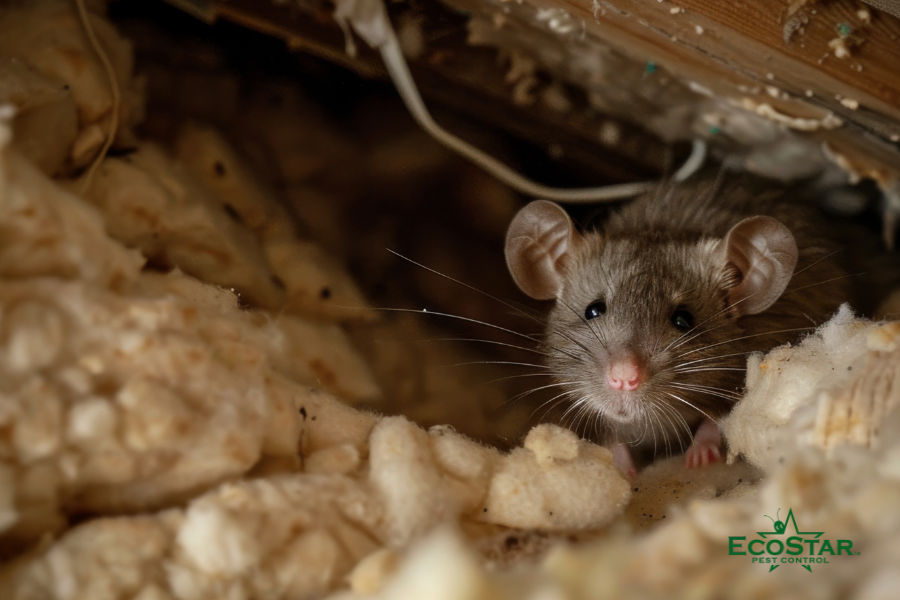
Seal first, then trap. Texas A&M recommends sealing likely entry points before controlling rodents inside. Otherwise new rodents keep replacing the ones you catch.
When Should You Call a Rodent Exterminator?
Call a professional rodent exterminator if:
- You hear activity in the attic or walls on more than one night
- You find fresh droppings after setting traps
- You see rodents during the day
- Entry points are on the roof or hard to reach
- You’re not sure whether it’s a rat or a mouse
Most people wait too long. An NPMA survey found only 17% of Americans call a pest professional at the first sign of rodents. Early action is cheaper and less disruptive than treating an established colony.
Professional rodent control services follow an integrated approach: inspection, species identification, rodent exclusion (sealing entry points), targeted trapping or baiting, and follow-up monitoring.
Frequently Asked Questions
Do mice and rats hibernate in winter?
No. Mice and rats stay active all winter. Instead of hibernating, they move to warm, sheltered places — often inside homes.
What does scratching in my walls at night mean?
Nighttime scratching usually means rodents are nesting or traveling inside wall voids. Overhead noises in the ceiling or attic often point to roof rats, which are common in Dallas–Fort Worth.
How small a hole can a mouse get through?
A mouse can fit through a hole about the size of a dime. A rat needs a hole about the size of a quarter.
Will rodents leave on their own when it warms up?
Usually not. Once rodents find food and shelter, they stay and breed. Entry points must be sealed and the existing population removed.
Is it safe to clean up mouse droppings myself?
For small amounts, yes, with precautions. Wear gloves, spray droppings with disinfectant, wipe them up with paper towels and never sweep or vacuum. For heavy contamination, such as soiled attic insulation, call a professional.
Are roof rats common in Dallas and Fort Worth?
Yes. Roof rats are common in urban North Texas. Mature trees, vines and attics give them an easy above-ground route into homes.
Get Rodent Control in Dallas and Fort Worth
Winter rodents are predictable: they come in for warmth, food and shelter, and they stay unless the home is sealed. The most effective fix combines a thorough inspection, exclusion of every entry point, and targeted removal.
EcoStar Pest Control provides rodent pest control for homeowners across Dallas, Fort Worth and surrounding areas. Our technicians inspect your attic, roofline and exterior, identify the species, seal entry points and remove active rodents. If rodents have damaged your attic insulation, we can also assess it through our attic insulation service.
Hearing noises in the attic or finding droppings? Contact EcoStar Pest Control today to schedule a rodent inspection and get Rodent Control Dallas and Fort Worth homeowners can rely on.